
Why Being Present With Your Partner Matters More Than Ever
I’m sitting at a restaurant overlooking the sea. The sun is setting, casting golden light across the water. Couples around me are dressed beautifully, clearly making an effort for this special evening. And yet, as I watch, something troubles me deeply.
At one table, a young couple spend their time not gazing at each other or the stunning view, but taking photographs of themselves against the backdrop—presumably for Instagram. At another, a family of four sits in silence, each absorbed in their own screen. Even at the bar, where live music fills the air, I see couples scrolling through social media, emails, news feeds—anything but engaging with each other or the beauty surrounding them.
And I find myself asking: Is this the end of true connection as we know it?
The Paradox of Connection
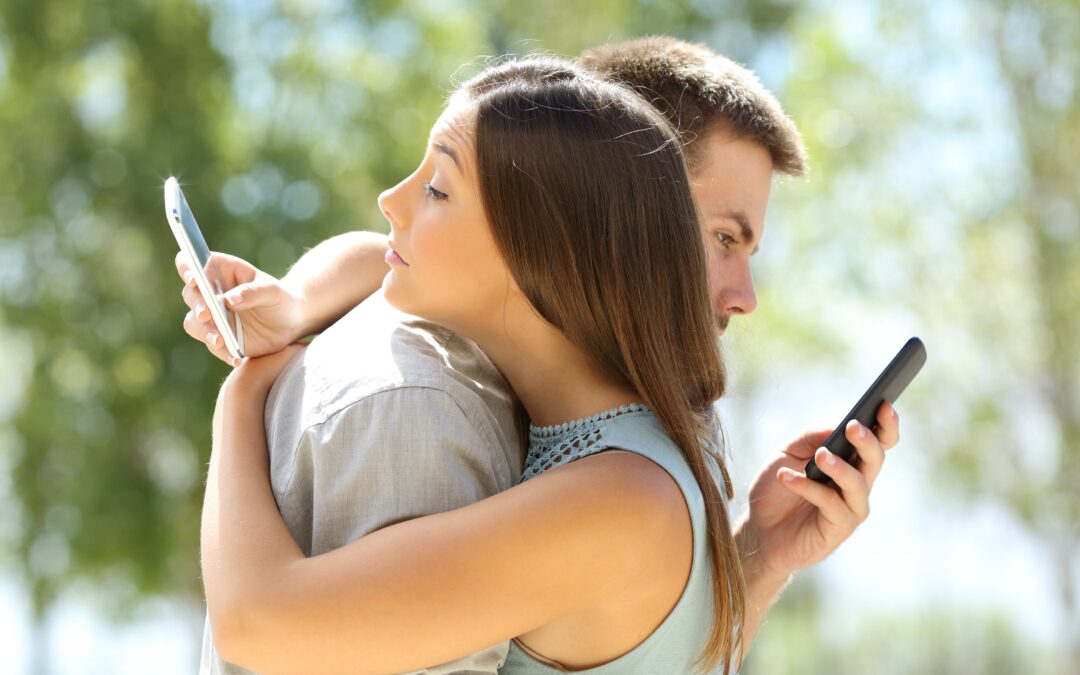
Here’s the irony that strikes me most forcefully. These couples have made the effort to be together. They’ve chosen this beautiful setting, dressed up, carved out precious time from busy lives. And yet, they’re not there. Not really. They’re simultaneously present in body and absent in spirit—a phenomenon researchers have termed ‘alone togetherness.’
The research confirms what my eyes are telling me. A recent meta-analysis synthesising data from 52 studies involving nearly 20,000 participants found that ‘partner phubbing’—the act of snubbing your partner in favour of your phone—significantly damages relationship satisfaction, intimacy, and emotional closeness. One study of married women found that over 70% reported mobile phones frequently interfering in their relationships, with almost a quarter saying it was causing genuine problems.
Perhaps most troubling: when we feel ‘phubbed’ by our partner, our brain registers it as actual rejection. Researchers at the University of Kent found that being ignored for a phone triggers the same neural pathways as social exclusion—what they call ‘micro-ostracism.’ In one moment, you’re with someone; in the next, you’re suddenly, painfully alone.
What We’re Losing
When I observe those couples taking endless selfies, I wonder: what validation are they seeking from strangers on the internet that they cannot find in the eyes of the person sitting across from them? Why do they need affirmation from people who don’t know them, when someone who loves them is right there?
The answer, I suspect, lies in what our screens are doing to our brains. Research published in Frontiers in Cognition reveals that excessive smartphone and social media use is associated with decreased empathy, shorter attention spans, and a diminished ability to recognise facial emotions. A 2025 study found that 68% of young people report difficulty focusing, with many struggling to engage with content lasting more than a minute. We are literally rewiring ourselves for distraction.
The constant dopamine hits from notifications, likes, and new content create what neuroscientists describe as addiction-like patterns. Our brains become conditioned to seek instant gratification, making it harder to engage in the slower, deeper work that genuine connection requires. The soft gaze of a partner, the subtle shift in their expression, the unspoken understanding that passes between two people who are truly present—these take time and attention that our scattered minds increasingly struggle to give.
The Beauty You’re Missing
But here’s what troubles me most. Those couples photographing themselves against the sunset are never actually in the sunset. They’re outside it, documenting it for later, for others, for some imagined future viewing. The experience itself—the warmth of the fading light, the salt smell of the sea, the extraordinary privilege of being in that moment with someone they love—passes them by unremarked and unfelt.
Research on mindfulness and presence tells us something profound: genuine wellbeing comes not from documenting our experiences but from fully inhabiting them. Studies show that people who practice present-moment awareness report greater life satisfaction, lower anxiety, and improved vitality. When we’re truly present, we don’t just observe beauty—we become part of it. We’re not separate from the sunset; we’re in it, breathing it, sharing it.
This applies equally to the person beside us. When we give our partner our full attention—what I call ‘presence’—we communicate something words cannot express: You matter. You are worthy of my full self. This moment with you is valuable. Eye contact, responsive listening, emotional attunement—these are the building blocks of intimacy, and they require us to put down our devices and truly see each other.
Reclaiming Connection
So what can we do? I don’t believe technology is inherently the enemy—it keeps us connected across distances and offers genuine benefits. But I do believe we’ve lost our way, allowing our devices to mediate experiences that deserve our direct engagement.
In my work with couples using the Relationship Paradigm, I focus on six elements: Communication, Connection, Commitment, Fun, Growth, and Trust. What strikes me is how fundamentally screens undermine all of them. They fragment our communication, weaken our connection, signal a lack of commitment to the moment, drain the fun from shared experiences, stunt our growth as partners, and erode the trust that comes from feeling truly seen.
Here’s my invitation to you: the next time you’re in a beautiful place with someone you love, try leaving your phone behind. Not in your pocket—somewhere you genuinely cannot reach it. Then pay attention to what happens. Notice the sunset with your eyes, not through a lens. Watch how your partner’s face changes in the fading light. Listen to the music. Feel the air. Be there.
You might discover that the affirmation you’ve been seeking from a thousand online strangers pales beside a single moment of genuine presence with someone who actually knows you. That the beauty captured in a photograph is nothing compared to the beauty experienced in the living moment. That connection—real, embodied, present connection—is what your heart has been hungry for all along.
A Final Thought
As I finish my dinner and prepare to leave this beautiful place, I make a decision. Tomorrow evening, when I sit with my wife Gwen watching the sunset over the harbour, my phone will stay in our cabin. I will give her my full attention. I will see the light in her eyes and feel the beauty all around us—not as something to capture, but as something to be.
Because in the end, our relationships are not built on the photographs we post but on the moments we share. Not on the likes we accumulate but on the presence we offer. The most valuable thing you can give your partner isn’t a perfect picture—it’s your undivided attention, your genuine curiosity, your full and present self.
The beauty is right in front of you. Look up. Be there. Really be there.
—
Dr Neil Wilkie is a relationship therapist, Visiting Fellow at Middlesex University, and creator of the Duo Coaching Framework. He is the author of the Relationship Paradigm trilogy for Routledge publishers.
For more on strengthening your relationship, visit duocoaching.co.uk